
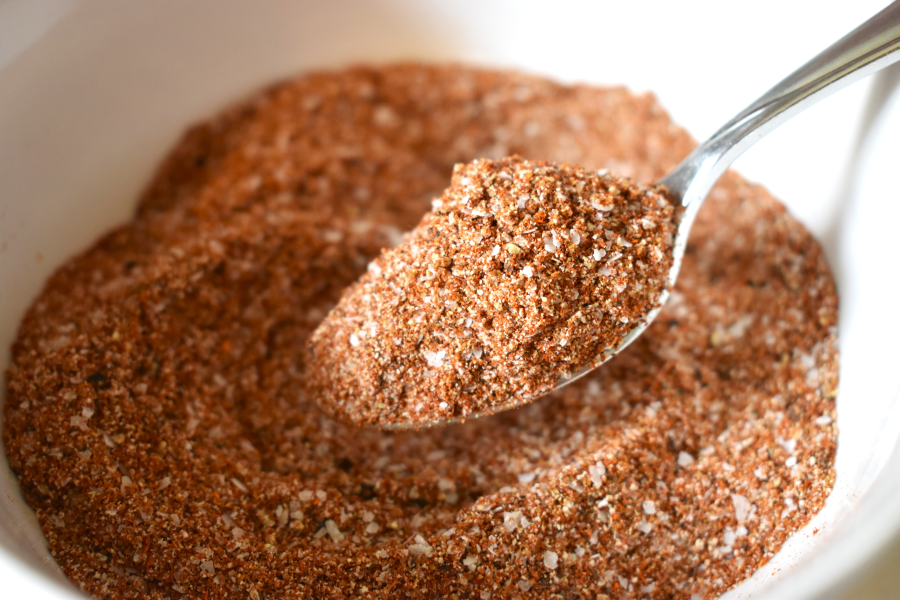
Looking for a barbeque rub that’s not sweet?
Whether you’re ditching added sugars, avoiding artificial sweeteners, or just looking for a healthier option, it’s shockingly hard to find a BBQ rub without any natural or artificial sweeteners. Since when did BBQ have to be sweet?
That’s why I developed this BBQ rub, packed with bold flavors that’ll complement anything you throw on the grill. Whether it’s chicken or ribs, this rub will make it taste like meat, not like a dessert.
To make up for the lack of sweeteners, I do throw in just a touch of cinnamon. I find that this brings out the natural sweetness in the meat without overwhelming it.

Do I need to use smoked paprika in this BBQ rub?
Smoked paprika is delicious, but it can be quite expensive! I’ve made this rub with both smoked paprika and normal paprika. Both work! You don’t really need to use smoked paprika, especially if you get a natural smoky flavor from cooking on a charcoal grill.
However, if you’re using an oven or a propane grill and want a smokier flavor, I’d recommend using the smoked paprika!
Should I add salt to this BBQ rub?
It depends on your goals. I find that this is the perfect amount of salt to bring out all the flavors in the meat and the rub (and it’s easier to salt and season the meat all in one go). However, if you prefer less salt or want complete control over the salt you use, leave it out and add it to the meat separately.
What diets does this BBQ rub with no sweeteners comply with?
This BBQ rub is perfect for those following a keto, low carb, paleo, Whole30, or ancestral diets. It’s also great for anyone simply trying to avoid added sugars and/or artificial sweeteners, as well as those who want to prioritize eating real food!
Or perhaps you’re not on any sort of diet and just want a BBQ rub that isn’t sweet – this is for you too!
What sauce goes well with this BBQ rub?
If you’re looking for a tangy BBQ sauce without any natural or artificial sweeteners, I have an easy recipe! I think they complement each other beautifully, especially since the spices are so similar.
However, any sauce you like will go well with this rub – there’s nothing that should conflict.

Ingredients
- 1 tbsp cumin
- 1 tbsp chili powder
- 1 tbsp garlic powder
- 1 tbsp onion powder
- 1 tbsp smoked paprika – or regular paprika, especially if you’re cooking over a charcoal grill. That will make it smoky already, so there’s no need to use more expensive paprika!
- 2 tbsp kosher salt – or omit if you want complete control of the salt content of your meal
- 1 tbsp coarse ground pepper
- 1 tsp cinnamon
- 1/2 tsp cayenne pepper – add more if you want a spicier rub or omit if you want a mild rub

Directions
Step 1: Add all spices to a bowl and mix to combine.

Equipment
*Disclosure: I only recommend products that I use or would use myself. The links above are affiliate links, which means that I earn a commission (at no cost to you!) if you make a purchase using the link.

Bold Homemade BBQ Rub (with no sweeteners)
Looking for a healthier rub this barbeque season? Here’s a bold & smoky BBQ rub with no sweeteners (natural or artificial), just real flavor!
- Total Time: 5 minutes
- Yield: about 1/2 cup
Ingredients
- 1 tbsp cumin
- 1 tbsp chili powder
- 1 tbsp garlic powder
- 1 tbsp onion powder
- 1 tbsp smoked paprika (or regular paprika)
- 2 tbsp kosher salt
- 1 tbsp coarse ground pepper
- 1 tsp cinnamon
- 1/2 tsp cayenne pepper
Instructions
- Add all spices to a bowl and mix to combine.
Notes
Pair this with a tangy BBQ sauce without sweeteners (natural or artificial) for the ultimate healthy BBQ!
- Prep Time: 5 minutes
- Cook Time: 0 minutes
- Category: Seasoning Mix
- Method: No cook
- Cuisine: American
- Diet: Dairy-Free, Gluten-Free, Keto, Low-Carb, Paleo, Pescatarian, Vegan, Vegetarian
Nutrition Facts
Amount Per Serving (about 2 tbsp)
Calories: 37 kcal
Fat: 1g
Total Carbohydrates: 8g
Fiber: 3g
Protein: 2g
The nutrition data provided here is for informational only and is only an estimate based on an online nutrition calculator. It cannot be verified or guaranteed, and should not be used in the treatment of medical conditions. It should not be considered a substitute for a professional nutritionist’s advice This data should be interpreted and used at your own risk.





Leave a Reply