
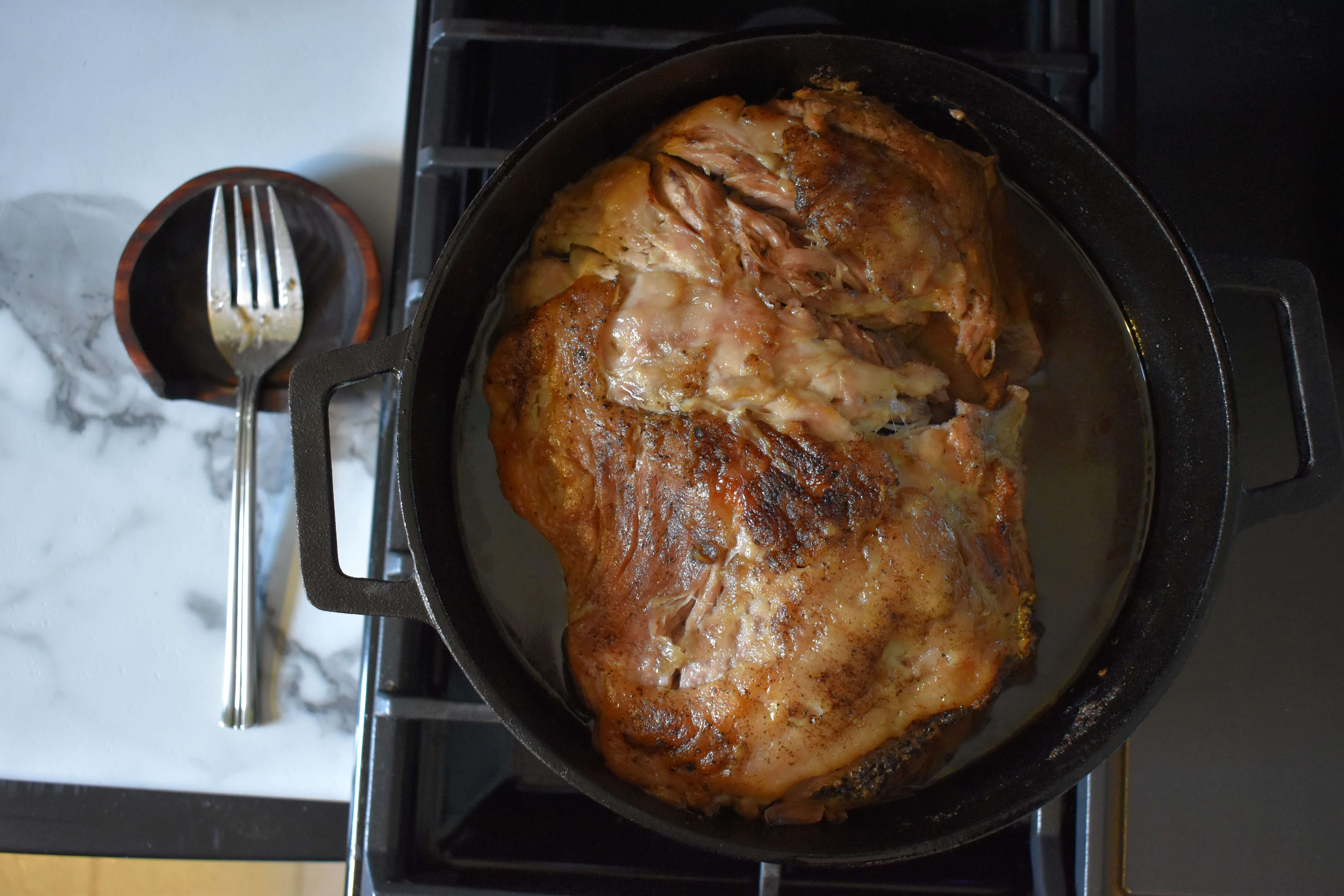
Pork shoulder is a favorite in our family. It’s cheap, hands-off, and has never let us down (not even when we were sleep-deprived brand-new parents that couldn’t do anything on a timetable). What’s not to love?
And don’t even get me started on the nutritional benefits of slow-cooked, bone-in meat – so good! Especially as a postpartum mom, the glycine and collagen found in slow-cooked tough cuts of meat (like pork shoulder!) are great for healing. No need for expensive collagen peptide powders when this is regularly on the menu rotation!
It also makes TONS of versatile leftovers. BBQ pulled pork sandwiches one night, a casserole the next, maybe a soup or a quiche as well. It’s great in quick, one-pot dishes that help you get dinner on the table in no time, like this Pork Egg Roll in a Bowl (better than takeout!) or this Pork, Apple, and Sauerkraut Skillet that tastes like Oktoberfest in a pan!


Or you can just eat it plain with some of the juices with a side of sauerkraut or mashed potatoes. It’s also delicious on top of a salad, along with some apples and kraut!
As a bonus, the pork juices and fat that are leftover can be repurposed in plenty of ways! Of course, you can save them to use when reheating the leftover meat to keep it just as moist and juicy as the first night. But don’t stop there! The juices are essentially a richly-flavored bone broth (notice how it becomes solid like jello once refrigerated? That’s because of all the gelatin!), so it’s delicious when used to make pasta, rice, or beans. The rendered fat also takes on the flavors of the pork shoulder, so it can be used to make some of the best fried eggs you’ll ever taste! Use your imagination and creativity – don’t let any of it go to waste!

Ingredients
I keep my pork shoulder simple so that the leftovers are as versatile as possible.
- Bone-in pork shoulder – I usually look for one that’s about 7lbs. That gives our family enough for about a week’s worth of leftovers! But find one that works for your family’s appetites and preferences (don’t get a massive pork shoulder if your family doesn’t like leftovers).
- 1 1/2 cup cooking liquid – Typically, I use 1 cup of homemade bone broth with about 3/8 cup apple cider vinegar, 1 1/2 tbsp soy sauce, and 1/2 tbsp Worcestershire sauce. Or, if we have it handy, I’ll use a beer my husband doesn’t plan to drink (a cheap one or a craft brew he’s not a fan of). You could also just use broth or whatever cooking liquid you have handy. It will add depth of flavor to the pork, but it’s very forgiving. Find what works for you!
- 1 tbsp salt
- 1 1/2 tbsp freshly cracked black pepper
And that’s it!

Directions
Step 1: Preheat oven to 325°F.
Step 2: Place pork shoulder in Dutch oven, fat cap up. Don’t trim this – it’ll keep your pork moist and juicy!

Step 3: Sprinkle the pork with salt and pepper, then pour the liquid over it.

Step 4: Place the Dutch oven in the preheated oven and cook until pork shreds easily with a fork. The cooking time varies widely, depending on the size of the pork shoulder, but I usually find it takes around 4 hours. Check it at around 3 hours, then every hour or half hour depending on how close it seems to done. It should be falling apart and separate easily from the bone. If there’s any doubt, cook it more – I’ve never cooked it too long! If it seems like it’s done before you’re ready to eat, just lower the oven’s temperature to 200°F.

Step 5: Transfer the pork shoulder to another bowl and shred to your liking. Serve!

Optional (but highly recommended!): Strain and reserve the cooking juices and fat – add a bit to the pork when you reheat the leftovers to keep them as moist and juicy as they were night one! Any leftover juices are great for making rice (it’s very high in protein, thanks to all of the gelatin from slow-cooking meat on the bone). And don’t even get me started on how delicious eggs fried in the leftover pork fat are!

Equipment
*Disclosure: I only recommend products that I use or would use myself. The links above are affiliate links, which means that I earn a commission (at no cost to you!) if you make a purchase using the link.

Easy Shredded Pork Shoulder
Feed a crowd or meal prep like a pro with this budget-friendly, hands-off, and fail-proof pork shoulder. It’s the perfect solution to any dinner challenge!
- Total Time: 4 hours 5 minutes
- Yield: 14 servings
Ingredients
- Bone-in pork shoulder (about 7 lbs)
- 1 1/2 cups cooking liquid (I use 1 cup bone broth, 3/8 cup apple cider vinegar, 1 1/2 tbsp soy sauce, and 1/2 tbsp Worcestershire sauce)
- 1 tbsp salt
- 1 1/2 tbsp freshly cracked black pepper
Instructions
- Preheat oven to 325°F.
- Place pork shoulder in Dutch oven, fat cap up.
- Sprinkle the pork with salt and pepper, then pour the liquid over it.
- Place the Dutch oven in the preheated oven and cook until pork shreds easily with a fork. The cooking time varies widely, depending on the size of the pork shoulder, but I usually find it takes around 4 hours. Check it at around 3 hours, then every hour or half hour depending on how close it seems to done. It should be falling apart and separate easily from the bone.
- Transfer the pork shoulder to another bowl and shred to your liking. Serve!
Notes
- The cooking liquid can be anything you’d like – cheap beer, apple juice, or broth are all good options. You could also just use water, though I would recommend tucking some vegetables (or vegetable scraps) around the pork shoulder to add some flavor.
- Strain and reserve the cooking juices and fat – add a bit to the pork when you reheat the leftovers to keep them as moist and juicy as they were night one!
- Prep Time: 5 minutes
- Cook Time: 4 hours
- Category: Main Dishes
- Method: Oven, slow cook
- Cuisine: American
Nutrition Facts
Amount Per Serving
Calories: 392 kcal
Fat: 26g
Total Carbohydrates: 1g
Fiber: 0g
Protein: 37g
The nutrition data provided here is for informational only and is only an estimate based on an online nutrition calculator. It cannot be verified or guaranteed, and should not be used in the treatment of medical conditions. It should not be considered a substitute for a professional nutritionist’s advice This data should be interpreted and used at your own risk.




Leave a Reply