
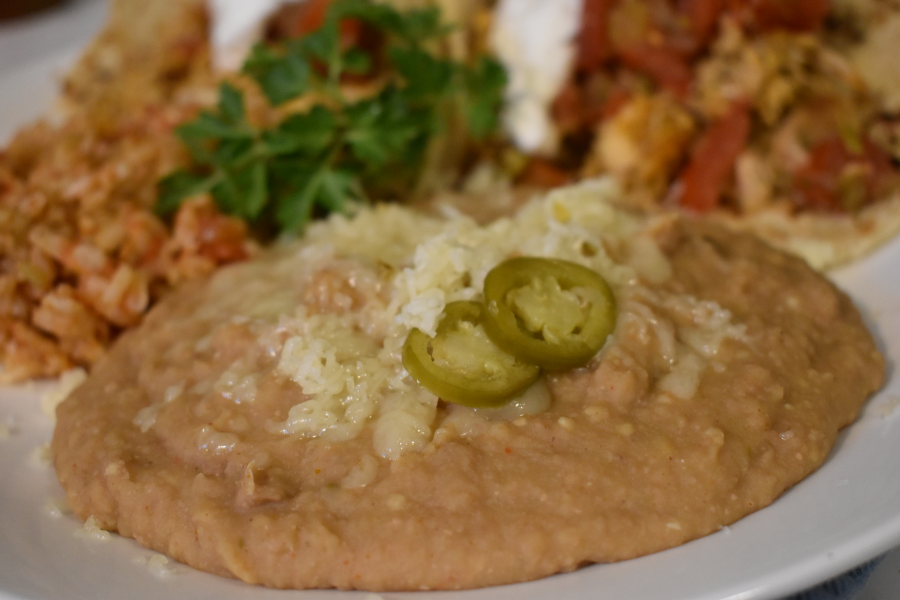
Growing up in San Diego, refried beans were a staple. Once I moved out to the Midwest, it was hard to find good Mexican food, and especially hard to find good refried beans. No wonder my Ohio-born-and-raised husband didn’t like them!
Fortunately, he came around once I learned how to make them well (after some trial and error). Perhaps I should say unfortunately because now there’s competition for the leftovers!
The secret ingredient here is the apple cider vinegar. The little bit of acidity cuts the richness of the beans and brightens all the flavors. A dash of hot sauce (acidity + heat) helps too!

Do I need to soak and/or sprout the beans?
Sprouting is optional, but don’t skip soaking the beans overnight. At least for our family, I’ve found that we all have significantly more digestive discomfort if the beans are not soaked or soaked for less time. Don’t be intimidated by the long soaking time – it’s entirely hands-off and worth every minute of waiting. Just set a reminder the night before you plan to make them and all will be well.
And while it’s optional, I highly recommend sprouting the beans if you’ve got the time and space. It really takes this recipe to the next level, in terms of both flavor and nutrition. Sprouting the beans has incredible benefits, including reduced anti-nutrient content, increased protein absorption, and improved digestibility.
How should I serve refried beans?
I love refried beans with any and all Mexican food, of course. If I have leftover shredded chicken (from roasting a whole chicken or two), or leftover shredded pork shoulder, you can almost guarantee that I’m going to make tacos or burrito bowls! Refried beans shine here, whether as a filling or as a side (or both).
I also love to eat refried beans topped with a fried egg or two. They’re also great in breakfast burritos. Or just eat them as a snack with a little sprinkle of cheese and, if I’m feeling spicy, a dash of hot sauce or some picked jalapenos!
Do I need to add fat to refried beans?
Technically, no. I accidentally made it without any added fat once and it still came out alright. However, it was nowhere near as filling or as satisfying. It was also less silky and the flavor was just not quite the same. That being said, if you are strictly limiting your fat intake, it can be made fat-free.

Ingredients
- 1 lb. dry pinto beans, rinsed
- 1 yellow onion, large, quartered with skin removed
- 1 tsp salt, plus more to taste
- 1/4 cup lard (tallow, butter, or bacon fat will also work)
- 4 cloves garlic, minced
- 2 tbsp taco seasoning – I like The Modern Proper’s recipe
- 2 tbsp apple cider vinegar, plus some for soaking the beans
- Hot sauce, to taste

Directions
Step 1: Soak the beans – Place the beans in a bowl and cover with at least 2 inches of warm water and a small splash of apple cider vinegar. Cover with a lid and a tea towel for 12 hours. Drain and rinse.

Step 2: Sprout the beans – Cover the drained beans with a lid and tea towel again. Rinse and drain about every 8 hours for about 48 hours or until you see the beans sprout.

Step 3: Cook the beans – Add the beans, quartered onion, and 1 tsp salt to a large pot. Add water to the pot, covering the beans by at least 2 inches. Bring to a boil over high heat, then reduce to low, cover, and simmer until tender (about 1 hour).

Step 4: Drain the beans – Drain the beans and onion, reserving a cup or two of the liquid.

Step 5: Season the beans – Put the beans back in the pot. Over medium heat, add the lard and mix in until melted. Add the garlic, taco seasoning, and apple cider vinegar. Stir and cook for 1 minute.

Step 6: Mash the beans – With an immersion blender (or a potato masher, or a fork), blend or mash the beans until they reach your desired texture. For thinner beans, add back some of the reserved cooking liquid, a few tablespoons at a time. Taste and season with additional salt and hot sauce to taste.

Equipment
*Disclosure: I only recommend products that I use or would use myself. The links above are affiliate links, which means that I earn a commission (at no cost to you!) if you make a purchase using the link.

Refried Beans
Ditch the cans and elevate your taco night with simple, flavor-packed refried beans – you won’t go back!
- Total Time: 13 hours 20 minutes
- Yield: 8 servings
Ingredients
- 1 lb. dry pinto beans, rinsed
- 1 yellow onion, large, quartered with skin removed
- 1 tsp salt, plus more to taste
- 1/4 cup lard (tallow, butter, or bacon fat will also work)
- 4 cloves garlic, minced
- 2 tbsp taco seasoning – I like The Modern Proper’s recipe
- 2 tbsp apple cider vinegar, plus some for soaking the beans
- Hot sauce, to taste
Instructions
- Place the beans in a bowl and cover with at least 2 inches of warm water and a small splash of apple cider vinegar. Cover with a lid and a tea towel for 12 hours. Drain and rinse.
- Optional (but highly recommended): Cover the drained beans with a lid and tea towel again. Rinse and drain about every 8 hours for about 48 hours or until you see the beans sprout.
- Add the beans, quartered onion, and 1 tsp salt to a large pot. Add water to the pot, covering the beans by at least 2 inches. Bring to a boil over high heat, then reduce to low, cover, and simmer until tender (about 1 hour).
- Drain the beans and onion, reserving a cup or two of the liquid.
- Put the beans back in the pot. Over medium heat, add the lard and mix in until melted. Add the garlic, taco seasoning, and apple cider vinegar. Stir and cook for 1 minute.
- With an immersion blender (or a potato masher, or a fork), blend or mash the beans until they reach your desired texture. For thinner beans, add back some of the reserved cooking liquid, a few tablespoons at a time. Taste and season with additional salt and hot sauce to taste.
Nutrition Facts
Amount Per Serving
Calories: 270 kcal
Fat: 7g
Total Carbohydrates: 39g
Fiber: 9g
Protein: 12g
The nutrition data provided here is for informational only and is only an estimate based on an online nutrition calculator. It cannot be verified or guaranteed, and should not be used in the treatment of medical conditions. It should not be considered a substitute for a professional nutritionist’s advice This data should be interpreted and used at your own risk.





Leave a Reply