
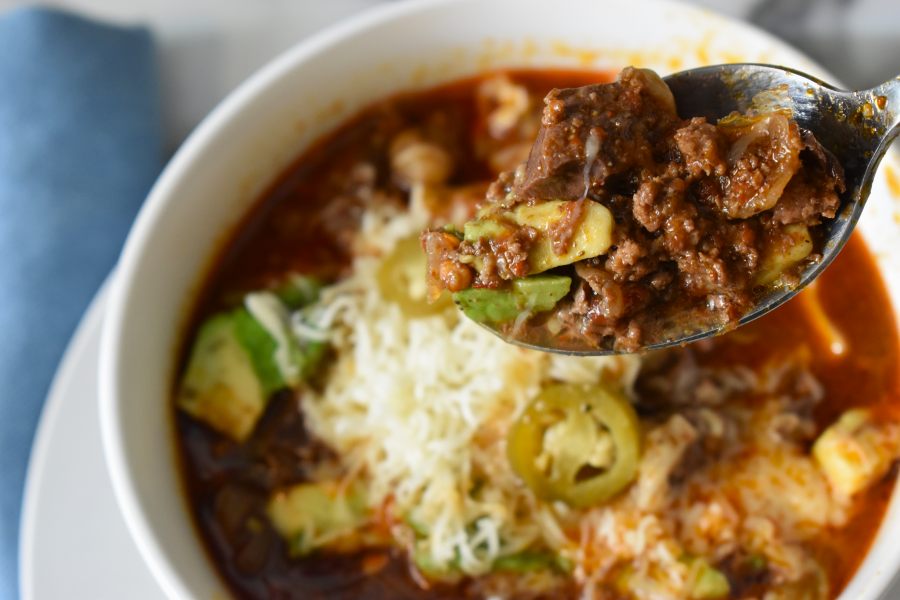
In many cultures, organ meats are a regular part of the diet. That is not the case in American culture, especially in the 21st century. We simply do not eat organ meats. And most Americans would tell you that they consider offal to be quite off-putting (to put it mildly).
I never ate any organ meats growing up. Frankly, they sounded gross. Why would someone choose to eat something like liver? There’s no way it could taste good. Hence all of the jokes about being chopped liver and such, right?
It turns out I was wrong. Organ meats can be delicious. They’re also incredibly affordable and some of the most nutrient-dense foods available. When you’re talking about nutritional bang for your buck, it’s hard to beat organ meat. Here are our family’s three favorite cuts, why we love them, and the best way(s) to prepare them!
The Best Organ Meats
1. Heart

Beef heart is easily our family’s favorite organ meat, and it’s not even close. When I asked my husband for his preference, he said “Heart. I’d eat heart every day if you let me.” I couldn’t agree more. And our otherwise somewhat picky toddler manages to out-eat me whenever I cook it, so I think I know his vote too!
Beef heart is a great source of CoQ10, an antioxidant that also plays a major role in metabolism. Since the heart is a muscle that doesn’t stop working while we’re alive, it uses a lot of CoQ10 to power its mitochondria. While CoQ10 is great for our own hearts, it’s also important for cognitive health, fertility, and cancer prevention.
I’ll be honest. Heart, before it’s cut up, really does look like heart. But that’s the hardest part about eating it. Otherwise, it’s a lean cut of muscle meat. I don’t find that it has any odd flavor or smell at all. It just tastes like any other cut of beef!
The texture is a bit different from skeletal meats because the muscle fibers are short and go in a bunch of different directions. As such, it’s difficult to get a good “against the grain” cut and it can get a bit tough when overcooked. However, especially when compared to other lean cuts, I don’t think the difference is that significant!
Given the texture of beef heart, I prefer to cook it either sliced and seared (like a steak) or cubed and slow-cooked (like stew beef). You can also prepare it like a roast! Basically, any way you would cook a lean, somewhat tough cut of beef works like a charm for beef heart.
Beef Heart Recipes


Cooking tip: Marinating the beef heart overnight, or even just for a few hours, in a bit of acid with some salt (and additional spices if desired) is a great way to add flavor and make the meat just a bit more tender. For example, for a quick taco night, I like to marinate it overnight with a squeeze of lime juice and some taco seasoning. Get a pan ripping hot, sear it quickly, and serve!
2. Liver

Liver is a bit of an acquired taste, but it’s a taste worth acquiring! I’ve written more extensively about the health benefits of liver in the past, but suffice it to say, it’s truly nature’s multivitamin. Cultures around the world reserve liver for young, newly married couples. Animal predators eat first. If you’ve ever wondered why there’s a buzz about it now, even in America, just take a look at all the nutrients it contains.
Eating liver has been the single best change our family has made to improve our health. We have more energy. We sleep better. I’ve even managed to cruise through my second pregnancy with minimal discomforts or complaints, save a bit of nausea early on and some physical limitations at the very end of the third trimester. I wondered what was making this pregnancy so easy compared to my first – then I saw my labs. Somehow, my body is in better condition now than it was before I got pregnant. And I attribute a lot of that to eating liver!
If you’re new to liver, I don’t recommend starting with liver & onions unless you’re really adventurous (though it is delicious)! It’s not necessarily that liver tastes bad, just that it has a rather distinct flavor and unique texture. Instead of eating liver straight, try it as “hidden liver” by combining pureed liver with ground beef. Start with just a little bit of liver (even if it’s just a tablespoon), then work up to about a 4:1 ratio of ground beef to liver. I’ve found that’s the sweet spot for our family, but feel free to go higher if it works for you!
Hidden Liver Recipes


Cooking tip: Add about a teaspoon of allspice to any recipe with liver. Somehow, it cancels out the more “minerally” flavors without significantly altering the flavors of the meal itself. Another way to reduce liver flavor is to add a bit of acidity with lemon juice or apple cider vinegar.
3. Tongue

I don’t cook tongue as much as heart and liver, but only because it’s harder to get from our butcher since it’s a popular cut! Like beef heart, tongue tastes a lot like a muscle meat, with no weird flavors. It’s texture is very similar to a roast because tongue is rather fatty.
While it’s delicious, tongue doesn’t have much in the way of nutritional benefits over regular beef. If you can find a great deal on it, it’s worth eating because beef is full of great nutrients and it’s a particularly yummy cut. However, I don’t go out of my way to get it, especially if it’s more expensive.
When I do have some beef tongue to cook, my favorite way to prepare it is to sear it and put it in tacos. Janine Farzin’s recipe on her blog, Offally Good Cooking, is foolproof. Basically, tongue is best brined overnight, rinsed, then boiled for a few hours. Remove it from the heat, peel it once it cools enough to handle, then cut and sear it in a hot pan with whatever seasonings you like. Prepared this way, it has a delightfully crispy exterior with a melt-in-your-mouth tender interior.
Where to Buy Organ Meats
Most likely, you can buy organ meats at your local grocery store. However, you’ll get a much better price (and much better quality) if you’re willing to do a bit of work. Call around to your local butcher shops and farmers, or speak to vendors at your local farmer’s market. In some cases, they’ll be happy to sell you offal at a very steep discount because they don’t have much use for it.
In our case, we found a butcher who usually sells quarter, half, or whole cows. As such, he’s often happy to give us hearts, livers, soup bones, and even suet (to render into tallow) at an incredible price so that it doesn’t go to waste or sit in his freezer. All in all, it usually comes out to less than a dollar per pound. It’s a win-win and has been the biggest blessing for our food budget!
All that to say, get to know your local farmers and butchers! They’re wonderful people and you never know what that relationship might bring!
Have you tried any organ meats? What are your favorites, and how do you like to prepare them?





Leave a Reply