
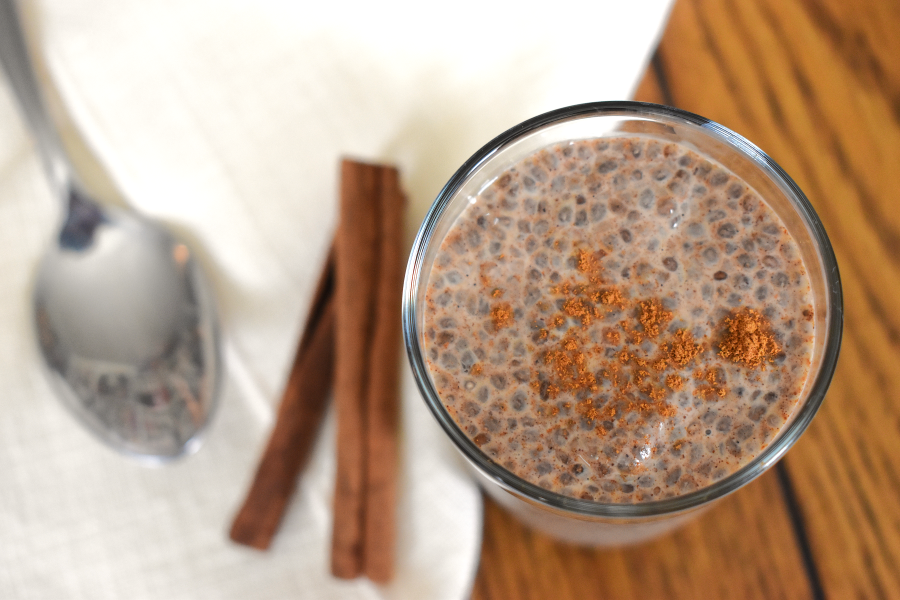
It’s that time of year, when the sweaters, boots, and pumpkin-spice everything are out in full force. And I’m all for it – aren’t you? So if you’re looking to increase your fiber this fall, you’re going to love this pumpkin spice chia pudding (with no added sweeteners)!
I’ve been enjoying this pumpkin spice chia pudding every morning with some black coffee before the kids wake up. It’s all the fall vibes, cozy spice, and caffeine of the classic pumpkin spice latte without the sugar and junk.
The best part is that the natural sweetness from the cinnamon, nutmeg, and vanilla extract trick your taste buds into thinking this chia pudding is sweet without needing to add any extra carbs or chemicals. You can, however, add a bit of pumpkin puree for extra creaminess and nutrients!

What are the benefits of chia pudding?
Chia seeds are great sources of fiber, healthy omega-3 fats, and even have some protein. I’ve found that the high soluble fiber content is chia seeds is especially great for keeping cravings at bay and for staying regular.
And while the omega-3s from plant sources are less bio-available than those from animals (like fish), it’s still a good way to sneak some in daily if you don’t consume a bunch of fish.

Can I sweeten this chia pudding?
Absolutely! This chia pudding would be yummy with some added maple syrup or honey if you want some natural sweetness. However, I think it tastes sweet enough without any added sweeteners. It’s totally up to you though!

How long does pumpkin spice chia pudding last in the fridge?
This chia pudding is good in the fridge for 5 days, perhaps longer (but it’s never lasted that long for me). It depends on the milk as well – don’t use milk too close to the expiration date!

Ingredients
- 1/4 cup chia seeds
- 2 tsp cinnamon
- 2 tsp ground nutmeg
- 1/4 tsp ground ginger
- A pinch of ground cloves
- 1 1/4 cups whole milk
- 1 tsp vanilla extract
- 2 tbsp pumpkin puree (optional)

Directions
Step 1: Mix the chia seeds and spices in a one-pint mason jar.

Step 2: Mix the milk, vanilla extract, and pumpkin puree (if using). Add to the chia seeds and spices, then stir to combine.

Step 3: Allow the mixture to rest for about 5 minutes, then stir again. Repeat until chia seeds are suspended evenly throughout the milk.

Step 4: Once the chia seeds are distributed evenly throughout, store in the fridge. For best results, allow it to rest overnight to help it thicken and gel.

Equipment
*Disclosure: I only recommend products that I use or would use myself. The links above are affiliate links, which means that I earn a commission (at no cost to you!) if you make a purchase using the link.

Pumpkin Spice Chia Pudding (with or without Pumpkin)
This fall, start your day strong with this simple unsweetened pumpkin spice chia pudding! It’s a delicious (and easy!) way to boost your fiber intake.
- Total Time: 5 minutes
- Yield: 3 servings
Ingredients
- 1/4 cup chia seeds
- 2 tsp cinnamon
- 2 tsp ground nutmeg
- 1/4 tsp ground ginger
- A pinch of ground cloves
- 1 1/4 cups whole milk
- 1 tsp vanilla extract
- 2 tbsp pumpkin puree (optional)
Instructions
- Mix the chia seeds and spices in a one-pint mason jar.
- Mix the milk, vanilla extract, and pumpkin puree (if using). Add to the chia seeds and spices, then stir to combine.
- Allow the mixture to rest for about 5 minutes, then stir again. Repeat until chia seeds are suspended evenly throughout the milk.
- Once the chia seeds are distributed evenly throughout, store in the fridge. For best results, allow it to rest overnight to help it thicken and gel.
- Prep Time: 5 minutes
- Wait time: 8-12 hours
- Category: Breakfast, Dessert, Snack
- Method: No cook
- Cuisine: American
- Diet: Gluten-Free, Low-Carb, Vegetarian
Nutrition Facts
Amount Per Serving
Calories: 162 kcal
Fat: 9g
Total Carbohydrates: 15g
Fiber: 7g
Protein: 6g
The nutrition data provided here is for informational only and is only an estimate based on an online nutrition calculator. It cannot be verified or guaranteed, and should not be used in the treatment of medical conditions. It should not be considered a substitute for a professional nutritionist’s advice This data should be interpreted and used at your own risk.




Leave a Reply