
Just a few years ago, I was eating the Standard American Diet without a second thought. In fact, I thought I ate pretty healthy since I cooked at home pretty often and included a lot of vegetables. I was a healthy weight. There was no reason to suspect I was doing anything wrong.
However, I was eating a lot of ultra-processed foods, though a lot of it was masquerading as “healthy.” I ate a good bit of takeout, but significantly less than many of my peers. There was also plenty of sugar and seed oils in the foods I made at home. But if it’s homemade, it couldn’t be that bad…right?
It wasn’t until after my first baby that I realized something was wrong. I didn’t feel like myself. I was exhausted and struggling. Slowly, I started to suspect that maybe my diet was part of the problem, that maybe I was missing something.
Turns out, I was missing quite a bit. Over the course of two years, I completely changed my family over to a real food diet, inspired by the principles of ancestral eating. And it was only after the birth of my second, with a blissful and easy postpartum recovery, that I realized just how much of a difference the diet change made.
When I look back at my journey, these five books were the ones that most radically changed the way I think of and approach the food choices I make for myself and my family.
1. Real Food for Pregnancy by Lily Nichols
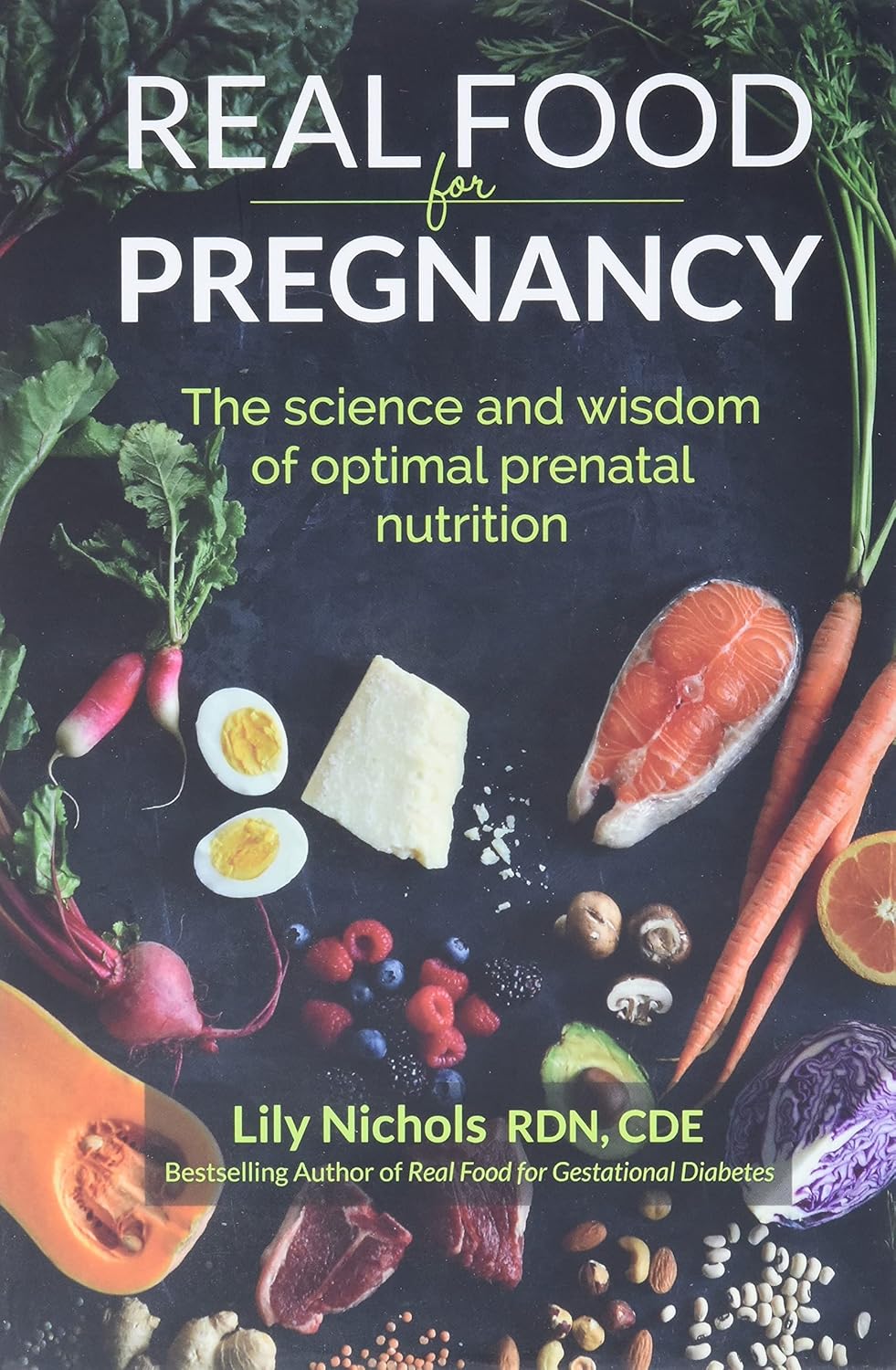
Lily Nichols’ Real Food for Pregnancy was the book that started it all for me. At six months postpartum, I finally read it at the urging of a friend. As I read it, so many of my symptoms started making sense. I thought I had eaten healthy in my pregnancy. Unfortunately, because the nutrition recommendations are based on so little evidence, I had almost entirely missed several key nutrients and was almost certainly deficient in quite a few others.
This was the book that got me started with hidden liver and cooking with organ meats in general. Out of all the changes I made, this was easily the most impactful. Even though I breastfed up until I was partway through my next pregnancy, my labs revealed a better nutrient status than I had in my first pregnancy. No wonder my second pregnancy (and postpartum) felt so much easier!
The thing I most appreciate about this book is that the emphasis is on the foods to prioritize, not the foods to avoid. I find that a helpful way of approaching food in general. If I focus on what I should eat, it’s much easier to avoid the foods that aren’t good for me because there isn’t room for them in my stomach, on my plate, or in our family’s budget.
Not pregnant? That’s okay – this book will still help you, regardless of your stage of life. However, Lily Nichols’ Real Food for Fertility is even better if you’re thinking about having babies at any point in the future (whether you’re a man or a woman).
2. Deep Nutrition

Dr. Catherine Shanahan’s Deep Nutrition is a very detailed look at the foods humans should be eating and the reasons why. And it’s not complicated! According to Dr. Cate, fresh foods, fermented/sprouted foods, meat cooked on the bone, and organ meats are the foundation for good health. I was pleasantly surprised by how easy her “Human Diet” was to implement, especially because it’s completely aligned with Lily Nichols’ recommendations. To my even greater delight, it made my cooking significantly better as well!
Again this book focuses on what you should have in your diet, not what you shouldn’t. I’ve found that slowly adding the foods recommended by Dr. Cate has displaced less nutritious foods, helping me to make better choices without relying on willpower. And because it tastes so good to eat this way, I’ve found that my cravings have changed as well.
Want to learn more about what not to eat? Dr. Cate’s Dark Calories is a deep dive into the harms caused by seed oils. I didn’t believe it at first, but after cutting seed oils from my diet, I can confirm that they really are just that bad. Now when I eat them, I notice how uncomfortable they make me.
3. The Dorito Effect

If you need extra motivation to avoid processed foods, Mark Schatzker’s The Dorito Effect has it in spades. With studies to back it up, Schatzker shows the harms caused by the way fake flavors (and textures) mess with how our bodies process the foods we eat. After reading it, I became even more determined to eat real food in order to avoid the additives in processed foods.
Of course, I still occasionally eat at restaurants or have an ultra-processed snack at an event for the purposes for fellowship. However, now that I know how those foods can mess with me, I’m more mindful of my eating after the fact.
Struggling with food cravings? You might enjoy Mark Schatzker’s other book, The End of Craving. I found that book helpful for identifying foods that I perceived as “desirable,” even though they were never satisfying. Now, I find that its easier to prioritize satisfying foods over foods that are merely desirable and leave me looking for more.
4. Good Energy

If you’re concerned about preventing chronic disease, Casey and Calley Means’ Good Energy is a must-read. As everyone knows, the mitochondria is the powerhouse of the cell. But most people don’t realize that how we eat impacts how the mitochondria functions. Damage to the mitochondria means worse metabolic health, which can manifest as a host of chronic health conditions, including infertility, type 2 diabetes, Alzheimer’s, cardiovascular disease, cancer, and more.
This book gives the blueprint for improving your metabolic health through small but impactful food and lifestyle changes. It also includes a deep dive into the lab values you should be looking at more closely and the optimal ranges (hint: they’re not the same as the ranges your doctor is looking it).
After reading this book, I was inspired to try wearing a continuous glucose monitor (CGM) while I was pregnant to screen for gestational diabetes. To say the least, it was a very eye-opening experience. While CGMs were not always available to non-diabetics, I’m delighted that they are now available over-the-counter at an affordable price (about $40-50 for 2 weeks). At the time of writing, the two options are the Abbott Lingo and the Dexcom Stelo.
Note: As a Christian, I disagree with some of the spiritual practices recommended in this book. However, the food and other lifestyle recommendations are quite good. As with everything, take the information that is helpful and leave what is not.
5. Nourishing Traditions
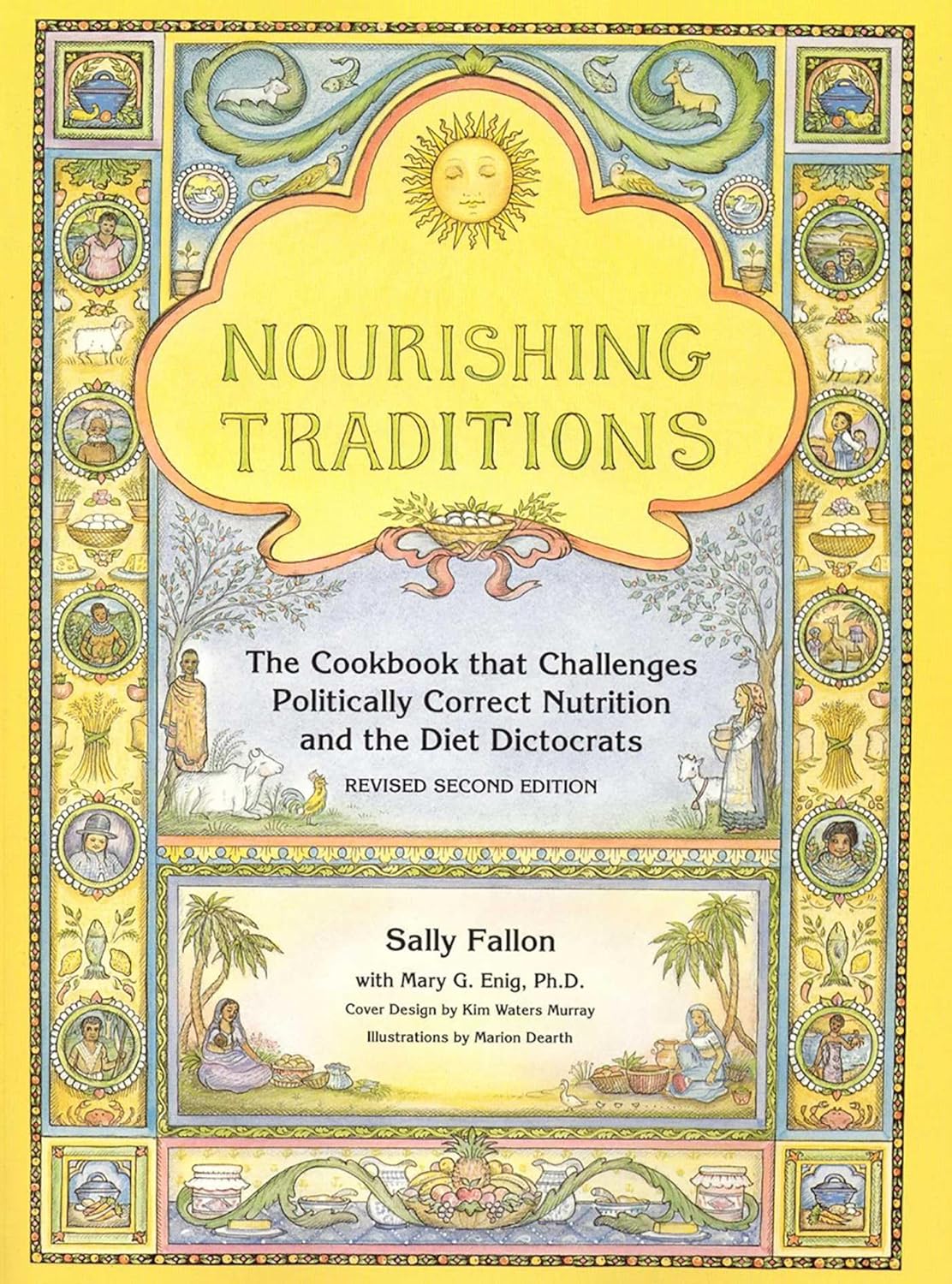
Finally, Nourishing Traditions by Sally Fallon is a great place to get started with eating ancestrally. It’s more than just a cookbook! At the beginning of each section and in the margins throughout, there is insightful commentary that challenges traditional nutrition advice. I’ve found that it’s a great starting point for me to do more research as I encounter information that challenges what I thought I knew. And, as I’ve read the books in the list above, I’ve appreciated the recipes and advice in this book more and more.
The thing I love most about the ancestral diet is that it doesn’t cut major macronutrients or entire food groups. There are ways to enjoy just about any food you want – it’s all about ingredient sourcing and preparation!
What books have had the greatest impact on your cooking and/or health journey? Let’s start a book club in the comments below!


Leave a Reply