

Intuitive eating may seem like a recent trend, but it’s not.
In fact, it worked for almost all of human history. It worked so well that it was simply “eating.”
That is, up until a few decades ago.
Obesity rates have exploded and now everyone seems to be on a diet or weight loss medication. People get fed up with restrictive diets and try intuitive eating, only to feel completely out of control.
It doesn’t have to be like this. Your body isn’t the problem, and neither is intuitive eating.
The problem is our food.
Our entire food system is full of non-food additives that trick our bodies. We have fake sugars, fat emulators, and a whole slew of artificial (or highly processed “natural” flavors”) that send our bodies mixed signals. I go more into all of the things that mess with us in this post here.
It’s no surprise that intuitive eating fails – nothing is intuitive about eating anymore!
However, if you switch to eating real food instead of ultra-processed foods, intuitive eating can and does work. In order to see the difference, I’d like to take a closer look at the 10 principles of intuitive eating.
The 10 Principles of Intuitive Eating
Please note that I am not a dietician or medical professional – just a mom with a great interest in feeding myself and my family nourishing food. This post does not constitute medical or dietary advice. Consult with a trusted professional before making any medical decisions.
1. Reject Diet Culture

Ultra-processed food: The reason many diets (paleo, keto, vegetarian, vegan, etc.) work for a time is that you’ve given up a lot of (or all) ultra-processed foods. Once you find ultra-processed foods that “comply” with your diet, you might find that the diet is less effective. If you’re restricting calories, you will often find that it works for a time, but as soon as you loosen up, the pounds come right back.
Real food: Eating real food is a lifestyle change, not a diet. An occasional ultra-processed treat doesn’t “ruin” your diet, it’s just a momentary departure from your usual eating pattern. There’s no need to “get back on track” or “make up” for it. Your body will adjust your hunger and metabolism to accommodate it without your conscious will.
2. Honor Your Hunger

Ultra-processed food: Ultra-processed foods are often designed to trick your body. You may feel hungry when you’ve just eaten something (especially if it spike & crashed your blood sugar). Some foods make you feel hungrier, or at least more driven to continue eating them, once you start. If you try to restrict yourself, you may find yourself ravenously hungry, food-obsessed, and out-of-control as soon as you lighten up even a little. With ultra-processed food, hunger cues are often unreliable.
Real food: When you eat real food, your body will tell you it is hungry when you need to eat something and stop you once you’re full. It’s very hard to overeat consistently on foods like steak, broccoli, and baked potatoes. Hunger cues are reliable signals that you can trust.
3. Make Peace with Food

Ultra-processed food: If no foods are off-limits, it’s very easy to eat highly palatable and highly addictive foods. Giving yourself “unconditional permission to eat” outside of the context of a balanced diet of real food can lead to the very same uncontrollable cravings and bingeing that this principle claims to avoid. If you’ve ever found yourself at the bottom of a bag of chips (or, in my case, box of Cheez-Its), you know that there are certain foods that you find particularly difficult to eat intuitively or in moderation.
Real food: Within the context of a primarily real-food diet, nothing needs to be off-limits. It’s fine to have ultra-processed foods now and then, but you will likely find that the more you eat real food, the less you want to eat processed ones. Because you now recognize that certain foods are pleasurable to eat but make you feel bad, you’ll find it much easier to eat them in small quantities or avoid them altogether. Better yet, if you can make it in your kitchen with real-food ingredients, it’s fair game! And shockingly, those homemade versions often taste much better than the processed version.
4. Discover the Satisfaction Factor

Ultra-processed food: There’s a big difference between craving a food (then eating it) and actually feeling satisfied when eating a food. It is very hard to feel satisfied when eating ultra-processed foods. They provide energy (calories) without the things our bodies need to function (protein, fiber, vitamins, and minerals). On top of that, food companies design their products to make it nearly impossible to eat just one bite. Their profit margins depend on us continuing to eat them. Often, the first bite is enjoyable, but leaves you wanting more. So you take another bite and feel just as empty as before.
Real food: Real food truly satisfies, often in much smaller quantities than we expect. Unlike processed foods, real food has the macro- and micronutrients our bodies need (in addition to calories). Think of a good steak. You don’t need that much to feel full – especially when compared to something like chicken nuggets! I also still remember the first bite I had of fresh-milled sourdough bread. It was the first time I had ever felt satisfied after just one small slice of bread, no cravings for more. I felt comfortably full and happy. Real food is the only way to experience true satisfaction when eating.
5. Feel Your Fullness

Ultra-processed food: Most ultra-processed foods are designed to override, or even completely bypass, fullness cues. I’m sure you’ve experienced this. Perhaps you felt pretty full after a meal, but then dessert came around. While you’re eating it, you don’t feel full at all. Then, when it’s all gone, you realize you’ve overeaten. My family joked about the spare “dessert stomach” when I was growing up, but now I notice that my “dessert stomach” has a twin – the “(ultra-processed) snack stomach.” I’m not sure where that whole box of Cheez-Its went, but somehow my hand hit the bottom without my stomach giving any indication that it was anywhere close to full. Yikes.
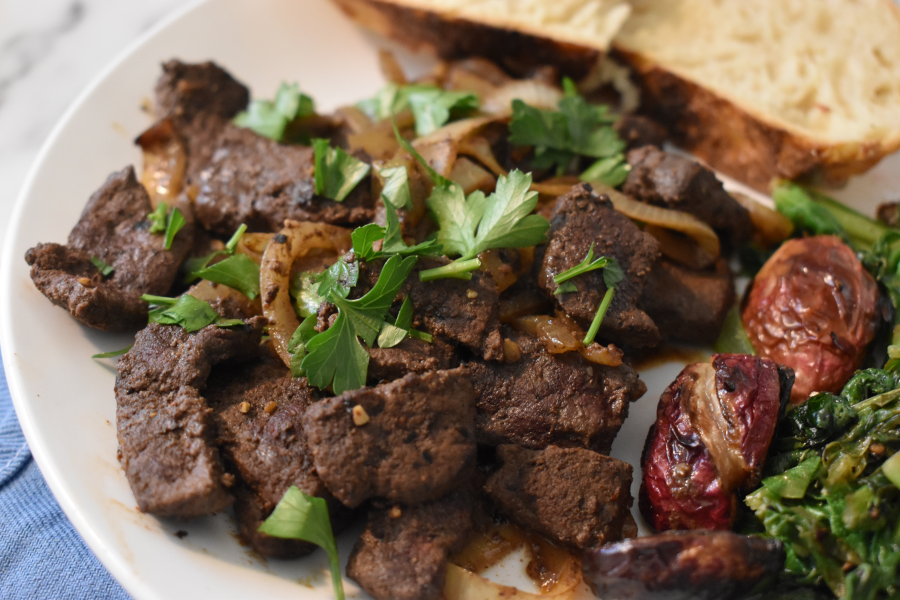
Real food: Can you overeat real food? Absolutely. Can you overeat real food consistently? I’d argue that that’s a much bigger challenge. When the body gets the calories and nutrients it needs in a form it recognizes, it sends a very clear signal that further consumption is unnecessary. I notice this most intensely when I eat a very nutrient-dense meal, like liver & onions (or anything with hidden liver). One bite is delicious, the next makes me feel like my stomach is at capacity. No matter how good it tastes, I don’t feel a desire to overeat. With real food, it’s easy to happily stop at full.
6. Challenge the Food Police

Ultra-processed food: You can challenge the food police when eating any food. There are a lot of food rules out there that are backed by very limited research or even none at all. In the past few decades, diet culture has given us some food phobias that actually make it hard to get the nutrients our bodies need (i.e. the war on fat). However, the reality is that some foods don’t make you feel good when you eat them. If you’re challenging the food police, don’t ignore your body’s signals – they might be trying to tell you something. Honestly, in my own real food journey, my biggest leaps forward have come when I ate “junk food.” Noticing that certain foods don’t satisfy me and make me feel crummy later in the day is enough to convince me to change my eating patterns!
Real food: If you’re eating real food, you can safely ignore silly diet rules. Intuitive eating is much easier when you are eating real food because your body will give you feedback about what it needs more or less of. Your cravings for real food are often signals about what nutrients (micro and/or macro) that your body needs. If you struggle with food rules, take a deliberate break from them to see if you’re restricting something you shouldn’t be. Notice what (real) foods you seek out. Sometimes, you may find that your diet was quite imbalanced before and you need to change that balance. Other times, it may just be a temporary or minor shift while you correct a nutrient deficiency. But you won’t know until you let go of those food rules!
7. Cope with Your Emotions with Kindness

Ultra-processed food: Food won’t fix your emotional problems, and I think it’s good that the 10 Principles of Intuitive Eating recognize that. However, what they don’t mention is that ultra-processed foods can make those emotional problems worse. This area of research is still rather young, but systemic reviews and meta-analyses like this 2022 article in Nutrients show that ultra-processed food consumption is linked to higher rates of depression and anxiety. If you’re struggling emotionally, ultra-processed foods are not your friends!
Real food: Real food still can’t necessarily fix your emotional problems, so emotional eating still isn’t the answer. Finding other coping mechanisms will be much healthier in the long run. However, some mental health issues are related to nutrient deficiencies. If you’re dealing with chronic mental health challenges, it may be worth taking a closer look at your diet to see if you’re missing any key nutrients. Over time, eating real food should help to correct nutrient deficiencies to an extent, though habitual eating patterns or preferences may mean that certain nutrients still fly under the radar.
8. Respect Your Body

Ultra-processed food: Body positivity can be a good thing, in the sense that being supermodel-thin isn’t realistic or healthy for most people. However, neither is being morbidly obese. Is it respectful of one’s body to deny it the nutrients it needs to function? Whether that denial comes through restrictive dieting or a diet of ultra-processed foods that lack nutritional value beyond their caloric content, there is nothing respectful about it!
Real food: Truly respecting your body means fueling it properly, with sufficient energy (calories) and nutrients. The only way to do this is to eat real food. Yes, our bodies can run for a while on empty calories, but it is not optimal and leads to greater health challenges down the line. If you haven’t been prioritizing nutrient-density, it’s time to start. This is especially true in nutritionally demanding seasons of life (preconception for men and women, as well as pregnancy/postpartum/nursing for women). A great place to start is adding just a bit of liver to your diet – the benefits are incredible! When consumed as hidden liver, it’s easy to sneak into all sorts of delicious meals.


9. Movement – Feel the Difference

Ultra-processed food: Many large food corporations tell us that we’re the problem. We’re gaining weight because we need to move more! They certainly won’t tell us to eat less, and especially not of their products. Unfortunately, the blood sugar crash that comes after eating ultra-processed foods often make us feel sluggish and unmotivated. That makes it hard to get up and move at all, unless it’s to the kitchen to grab a conveniently-packaged snack. It’s time to break lose from the vicious cycle.
Real food: Once you start eating real food, you’ll naturally move more because you have more energy. The type of movement will depend on your preferences and season of life. For some, it will be weight lifting, running, or another more formal type of exercise. For others, it will be walking, gardening, doing chores, or simply increased movement throughout the day. Don’t stress about exercise – focus on fueling your body with good food and move in ways that you enjoy.
10. Honor Your Health – Gentle Nutrition

Ultra-processed food: For the vast majority of people, an occasional ultra-processed snack or meal out is not going to destroy your health. However, if occasional becomes regular, or even daily, that’s when problems may start to crop up. The 10 Principles of Intuitive Eating claim that “it might be surprising for you to learn that what you eat and how you move your body only accounts for ten percent of your health” without providing any citation for this claim. I’m not sure what the basis for this claim is, but frankly, it seems quite ludicrous to me. Perhaps your experience will be different from mine, but I’ve found that improving my diet improved my health (and by extent, the rest of my life), by a whole lot more than 10%. I would place it at 90% or more!
Real food: Again, you don’t need to avoid all ultra-processed foods at all cost once you commit to a real food diet. I absolutely agree that “progress, not perfection, is what counts.” However, ultra-processed foods shouldn’t be a regular habit. One thing that I’ve really enjoyed is recreating my favorite ultra-processed foods with real-food ingredients. Once I try the real food alternative, I often find I prefer it to the ultra-processed version because it is more satisfying, tastes better, and make me feel great. But when you do eat ultra-processed foods, enjoy them and don’t stress, but do make note of how they make you feel.
What are your thoughts on the 10 Principles of Intuitive Eating? I’d love to hear your thoughts in the comments below!






Leave a Reply