
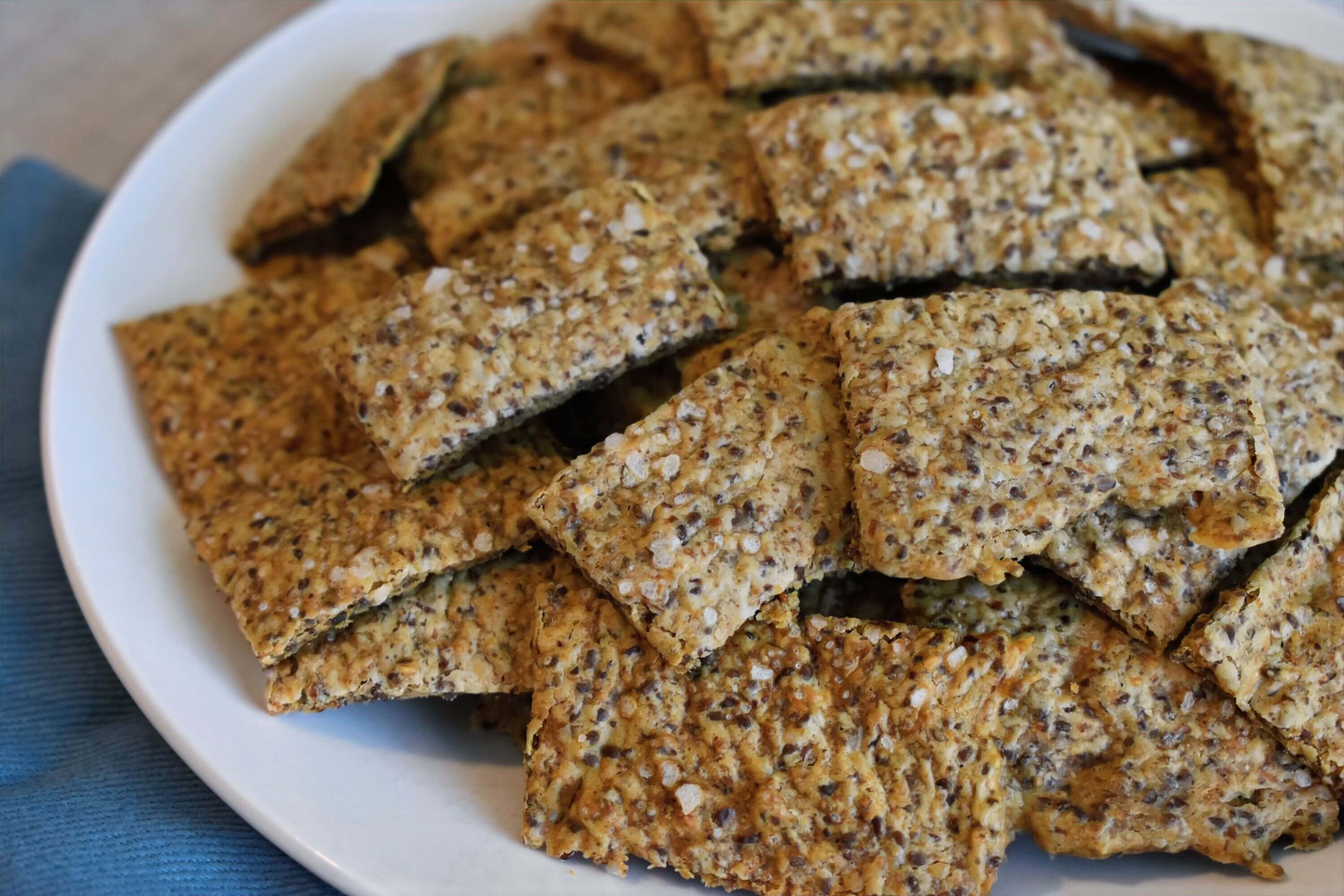
When our family started to learn more about which food ingredients to try to avoid, crackers were the biggest disappointment. The ones at the store are full of seed oils, added sugars, preservatives, and sometimes even food dyes! Not to mention the fact that most crackers will send your blood sugar through the roof, only to crash back down again due to all the refined carbohydrates. Ugh.
But we LOVE crackers, especially with some slices of cheese and meat or for shoveling out some tuna salad (or just to on their own…I’d be lying if I said I had never finished off a sleeve of Ritz in one sitting). We definitely needed something to fill that void!
Enter these sourdough discard seed crackers. They’re the perfect easy and healthy swap for store-bought crackers, with only two essential ingredients and flexible add-ins for endless flavor options. No added junk – just sourdough discard and butter (or tallow), with some chia seeds and flaxseed meal for fiber and healthy omega-3 fatty acids and a sprinkle of salt for flavor! They’re simple and delicious.

Are sourdough discard seed crackers healthy?
Yes! When compared with store-bought crackers, these crackers will keep your blood sugar much more stable. According to Lily Nichols, RDN, traditionally fermented sourdough (and thus sourdough discard with no added flour) is much lower glycemic because the yeast eat the starches during the fermentation process and produce acids as byproducts that slow the rate that the remaining starches hit your blood sugar. The yeast also produce amino acids during fermentation that help to regulate glucose metabolism (and give you a bit of extra protein).
On top of the benefits of sourdough, the chia seeds and flaxseed meal in these crackers provide a hefty dose of fiber, which further helps with blood sugar regulation. They also contain omega-3 fatty acids, which are particularly important for pregnant and nursing mamas because our bodies are giving so many of them to our babies for their rapidly growing brains! While the omega-3s in flaxseeds and chia seeds are not as bioavailable as the omega-3s from animal sources (particularly fish), they still count, especially in the context of a low omega-6 diet where omega-3 absorption is higher!
What should I eat with sourdough discard seed crackers?
These crackers are perfect for whatever you normally eat with crackers – cheese, meat, spreads, dips, or on their own as a delicious snack! I particularly enjoy eating them with some tuna salad or beef liver pâté.
Can I modify these crackers?
Yes, easily! I wouldn’t recommend modifying the base recipe (sourdough discard and butter), but the salt can be adjusted to taste and the chia seeds and flaxseed meal can be omitted or swapped without issue. You can also add any seasonings that you like – garlic, chives, onion, Italian seasoning…whatever floats your boat!
How long are these crackers good for?
If cooled completely then stored in an airtight container, they will last about a week. However, I’ve rarely been able to get a batch to last that long without my family gobbling them up!

Ingredients
- 200g (3/4 cup) sourdough discard – active starter will work too!
- 2 tbsp butter, melted – I often use tallow instead, as you can see below. Up to you!
- 1/4 tsp salt – plus more for sprinkling on top. A nice flaky sea salt is ideal for these crackers, but any salt will do.
- 2 tbsp flaxseed meal
- 2 tbsp chia seeds

Directions
Step 1: Preheat the oven to 325°F. While it’s preheating, prepare a baking sheet by lining it with parchment paper.
Step 2: Heat the butter (or tallow) until just melted (we don’t want it piping hot because that will kill the yeast), then mix in the sourdough discard, salt, flaxseed meal, and chia seeds.

Step 3: Spread the batter in a thin, even layer on the parchment paper on the baking sheet with a spatula, then sprinkle with salt. I like a very generous sprinkle of salt, but use less if you don’t like your food as salty.

Step 4: Bake for 10 minutes, then remove from the oven and score the crackers with a pizza cutter or knife.

Step 5: Bake the crackers until golden brown, about an additional 20-50 minutes. Watch carefully to make sure that they do not burn – it can happen quickly.

Step 6: Allow the crackers to cool completely before breaking apart and storing in an airtight container for up to one week.

Equipment
*Disclosure: I only recommend products that I use or would use myself. The links above are affiliate links, which means that I earn a commission (at no cost to you!) if you make a purchase using the link.

Sourdough Discard Seed Crackers
These thin and crispy crackers with a slight sourdough tang are the perfect healthy swap! They’re packed with healthy fiber and fats to keep you full and your blood sugar balanced. Easy enough for a packed lunch, but also elevated enough for a fancy charcuterie board!
- Total Time: 1 hour 10 minutes
- Yield: 4 servings
Ingredients
- 200g sourdough discard (or active starter)
- 2 tbsp butter, melted
- 1/4 tsp salt, plus more for sprinkling on top
- 2 tbsp flaxseed meal
- 2 tbsp chia seeds
Instructions
- Preheat the oven to 325°F. While it’s preheating, prepare a baking sheet by lining it with parchment paper.
- Heat the butter until just melted (we don’t want it piping hot), then mix in the sourdough discard, salt, flaxseed meal, and chia seeds.
- Spread the batter in a thin, even layer on the parchment paper on the baking sheet with a spatula, then sprinkle with salt.
- Bake for 10 minutes, then remove from the oven and score the crackers with a pizza cutter or knife.
- Bake the crackers for an additional 20-50 minutes, until the crackers are golden brown. Watch carefully to make sure that they do not burn – it can happen quickly.
- Allow the crackers to cool completely before breaking apart and storing in an airtight container for up to one week.
Nutrition Facts
Amount Per Serving
Calories: 175 kcal
Fat: 9g
Total Carbohydrates: 17g
Fiber: 7g
Protein: 5g
The nutrition data provided here is for informational only and is only an estimate based on an online nutrition calculator. It cannot be verified or guaranteed, and should not be used in the treatment of medical conditions. It should not be considered a substitute for a professional nutritionist’s advice This data should be interpreted and used at your own risk.





Leave a Reply