
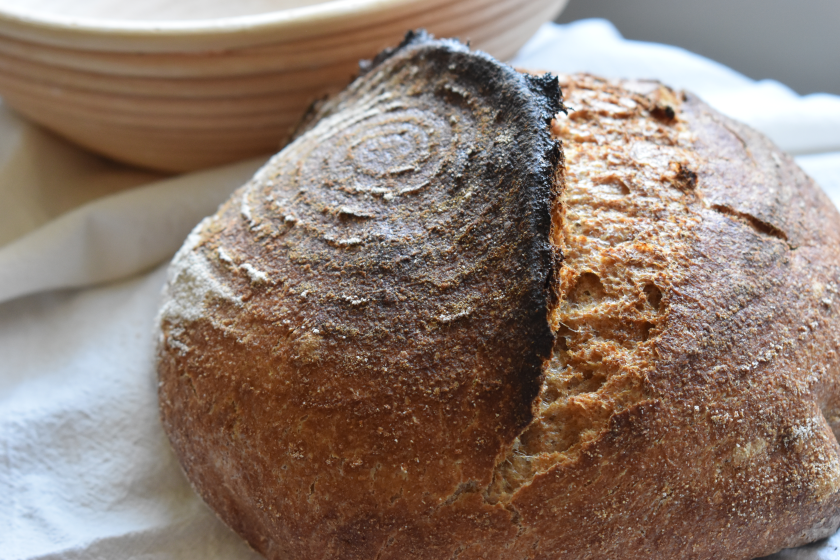
I totally missed out on the sourdough craze of 2020. It seemed like everyone online had started their own sourdough starter while stuck inside due to the lockdowns, while I was mostly eating junk food. My own real food journey was still several years away.
In 2024, after learning a bit more about the importance of eating real food, I finally decided to give it a try. I feared that it would be difficult, time-consuming, and expensive. To my great surprise, not only were my fears misplaced, but the opposite was true. Sourdough can be incredibly easy and cheap, with minimal hands-on time.
Now I only bake with sourdough. And life has never been better!
3 Reasons to Get Started with Sourdough Today
If you’re worried about getting started with sourdough (like I was), there’s no reason to fear. Yes, you could get very fussy and particular with it if you want to, but you don’t need to. Even if your bread isn’t Instagram-worthy every time, it will still be better (in so many ways) than any bread you can buy in the store.
1. Sourdough is cheaper than its yeasted counterparts

Yeast isn’t terribly expensive to buy, but it adds up the more you bake from scratch. And if you’ve ever planned to bake then realized you didn’t have any yeast (or your yeast was no longer active), you know the disappointment and frustration!
But did you know that you have yeast already floating around your kitchen and that you can capture it for free? That’s how humans made bread for millennia! When you start your own sourdough starter (or get a bit from a friend), the only cost is a bit of additional flour to feed it. And if you use a no-discard method or use your discard, nothing goes to waste!
Rather than paying for flour, water, salt, and yeast when you bake bread, you’ll only be paying for flour, water, and salt. And if you compare the cost of true sourdough in the store (look for no yeast on the ingredient label) to your bread, you’re really coming out ahead!
2. Long-fermented sourdough is healthier, especially for your blood sugar and metabolic health

While a 2022 systematic review article in Advances in Nutrition did not find a clear consensus on the benefits of sourdough across 25 clinical trials, there were certain trends that indicate potential health benefits.
Sourdough has a lower glycemic index
In several studies examined by the systematic review, subjects showed a significant reduction in blood sugar response when consuming sourdough vs. yeast bread. This aligns with my own experience and the experience of prenatal nutritionist Lily Nichols, RDN, as she writes in her blog post. However, not everyone’s body will respond the same way and sourdough can be made in many different ways. If you are concerned about your blood sugar, I recommend checking with a finger-prick glucometer or continuous glucose monitor (Abbott’s Lingo and Dexcom’s Stelo are both over-the-counter options) to see your individual response.
Nichols explains that the reason for sourdough’s lower glycemic index is that the yeast and bacteria in sourdough-fermented breads eat the starches and produce acids that reduce the rate of starch digestion and delay gastric emptying. This both reduces the quantity of glucose and the speed at which it hits the blood stream. As a result, blood sugar rises more slowly and less high, preventing the spike and crash that can happen with high glycemic foods.
Other Benefits of Sourdough Fermentation
The health benefits of sourdough fermentation go far beyond blood sugar, as described in a 2024 article in Foods. Those include a reduction in phytic acid (increasing bioavailability of minerals like calcium, magnesium, iron, copper, and zinc), reduction in gluten (may reduce digestive problems in those with non-celiac gluten sensitivity), increased fiber and prebiotics, and higher B-vitamin levels.
The acids in sourdough baked goods also naturally lengthen its shelf life when compared to yeasted breads. That means less food waste! I can certainly attest to the long shelf life of sourdough products. While they can become stale, a quick toast or reheat often revives them. We have never had a sourdough bread or other product become moldy while sitting on our counter, even after over a week.
3. Sourdough just tastes better!

That little bit of sourdough tang is often exactly what a baked good needs to go to the next level. For example, you’d never know that my Simnel Cake is sourdough just by tasting it, but you would notice something missing if I didn’t ferment it!
Not every sourdough product has the intense tang of San Francisco sourdough – in fact, I’ve found that mine are often only mildly or moderately acidic in flavor. A lot depends on the strains of yeast in your kitchen and region – San Francisco has a uniquely tangy strain! Nevertheless, our family has found that the slight tang of sourdough deepens all the other flavors and adds a lovely complexity to foods that might otherwise be a bit bland.
Think about it like adding a squeeze of lemon or lime to a meal or just a bit of vinegar to a sauce. That bit of acid can really brighten up all the flavors in a dish, taking it from flat to fantastic! It’s also a lot like salt, especially in baked goods. Even if you don’t taste it, it’s there helping all the other flavors shine.
Those are my top three reasons for getting started with sourdough Do you bake with sourdough? Let me know why or why not in the comments!






Leave a Reply