
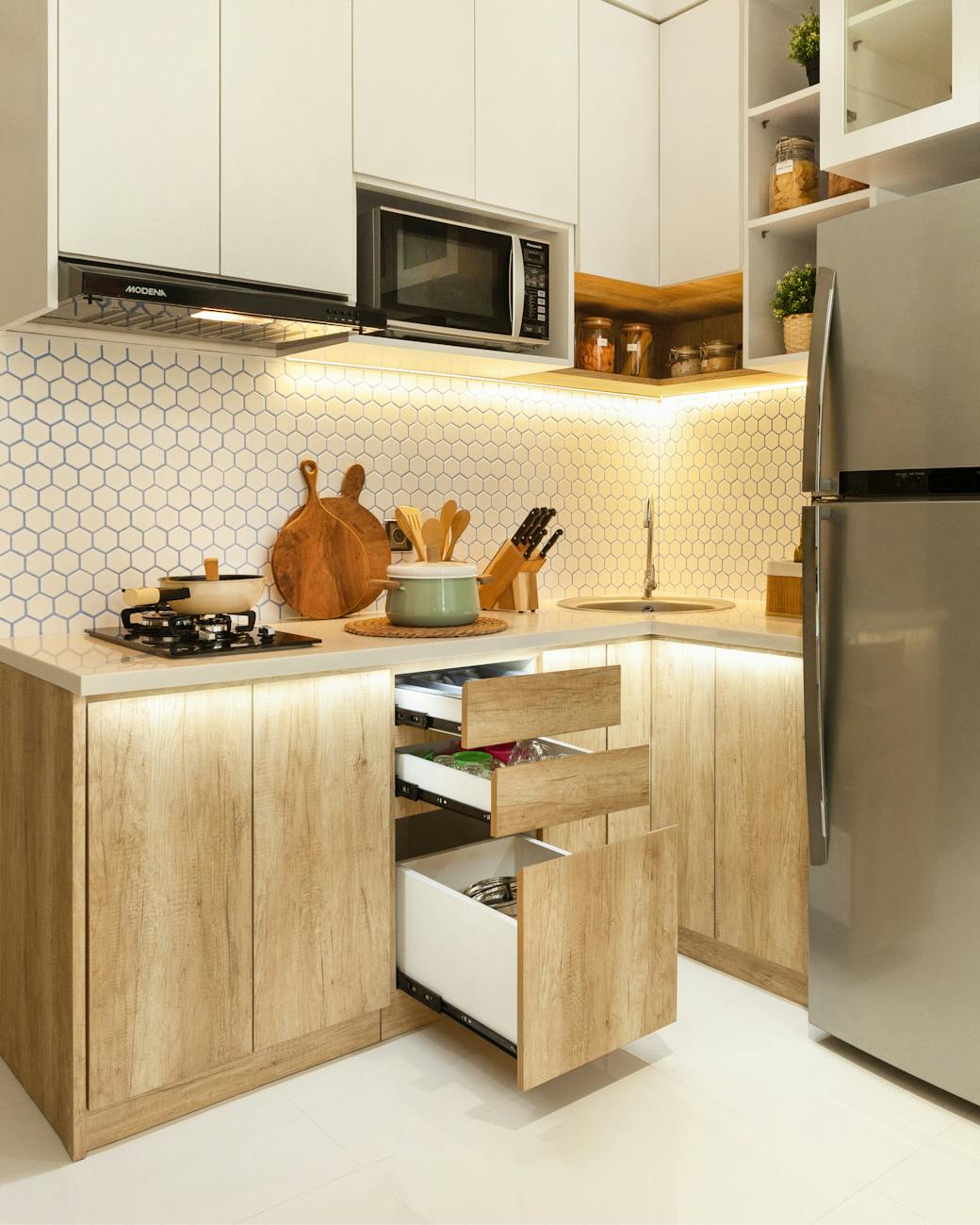
You just need some kitchen essentials…whatever that means.
You may have just moved into your first place with a kitchen. Or perhaps you’re getting married and are setting up your registry. Or maybe you’re finally determined to learn to cook for yourself rather than relying on frozen meals, take-out, and delivery. Whatever brings you here, you’ve come to the right place!
One decade ago, I moved out of the dorms and into my first apartment with a kitchen. I was so excited to be off the meal plan, but daunted by the prospect of being entirely responsible for my three daily meals for the first time in my life. Today, I may have a food blog and love to cook, but that certainly wasn’t the case back then. It didn’t take long to realize I had no idea what I was doing, what I needed, or even where to start.
In honor of hitting the one-decade mark of this minor life milestone, I’m sharing what I wish I had known back then. Here’s all the kitchen essentials you’ll need to make any recipe happen.
Two Ways to Buy Kitchen Essentials on a Budget
Setting up your kitchen for the first time while on a tight budget is a daunting prospect. Even for a very minimalist set-up, you still need a fair bit of stuff. And that stuff all costs money.
Don’t panic. Here are three ways to set up your kitchen without breaking the bank.
- Ask around. Let people (especially those with established kitchens) know that you’re setting up your kitchen for the first time. They may have duplicates or older things they don’t use anymore (things they plan to donate but haven’t gotten around to it yet). It’s a win-win. They get to de-clutter. You get to equip your kitchen. For free.
- Check out your local thrift stores. Bring a list of items you’re looking for and visit your local thrift stores. You can find everything from small appliances to fancy china to the most basic essentials. If you look carefully, there are often high quality items that, while used, still have many good years of life left in them. Bonus tip: Keep an eye out for extra discounts. Sometimes it’s a specific color of tag that’s 50% off, entire categories that are discounted, or a day of the week when a special discount applies. Every store is different, so don’t be afraid to ask!

Basic Equipment
What I consider essential, you may not, depending on your cooking needs and season of life. If you live alone and hate leftovers, you will need fewer and smaller things than someone who loves to meal prep with several mouths to feed. However, these are the basics that I consider the most versatile, regardless of your station in life. You will likely add more as you go, but this will get you started!
Cooking Equipment Essentials
- Pots – A small pot is good for sauces and single-serve dishes, while a larger pot is good for soups, beans, one-pot dinners, broth, meal prepping, etc.
- Best material: Stainless steel (durable and non-toxic)
- If I could only have one: A stainless steel 6-quart pot!
- Pans – Similarly to the pots, a small pan is nice for cooking eggs and single-serve dishes, while a large pan gives you space to make larger dishes or cook larger cuts of meat.
- Best material: Stainless steel (durable and non-toxic) or cast iron (durable, non-toxic, and prevents anemia, but slightly more maintenance than stainless steel)
- If I could only have one: Either a 12″ stainless steel skillet or a 12″ cast iron skillet
- Sheet pan – It’s nice to have a few, but one will do to start. I prefer baking sheets with a rim because they prevent juices/oils released while cooking from making a mess of your oven.
- Best material: Stainless steel (durable and non-toxic)
- If I could only have one: Honestly, I’d get a set, like this one. However, if you find one at a thrift store or are given one, any sheet pan will do!
- Casserole Dish – There’s so much you can do in a casserole dish, even if you don’t make casseroles. You can roast a chicken (or two), meal prep or feed a crowd with a crustless quiche, or make buns.
- Best material: Glass (affordable, durable, and non-toxic)
- If I could only have one: A basic 9″x13″ casserole dish is all you really need. That being said, if you like cooking for a bigger crowd, I found an 11″x16″ casserole dish on clearance a few years ago that quickly became my preferred casserole dish.
- Meat Thermometer – If you cook meat, this makes it so much easier and will prevent you from accidentally getting food poisoning.
- Analog ones are cheap, but digital ones aren’t that much more expensive. I like a digital one that takes a AAA battery (rather than a special button battery).
- Oven Mitts/Potholders/Trivets – don’t burn your hands or melt your countertops. Get a set of mitts and trivets – either cotton or silicone. I prefer cotton, but know many people who prefer silicone.

Prep Equipment Essentials
- Mixing bowl(s) – You’ll need it for mixing, prep, salads, storage, and all sorts of other things.
- Best material: Glass (durable, non-reactive, non-toxic)
- If I could only have one: I absolutely love my set of Pyrex glass mixing bowls with lids, but if I could only have one, it would be the 4-quart bowl.
- Colander – For both rinsing and straining things.
- Best material: Stainless steel (durable, non-toxic)
- If I could only have one: A nice, big, stainless steel colander!
- Measuring Spoons & Cups – you just need one set of dry measuring spoons (1/4, 1/3, 1/2, and 1 tsp and 1 tbsp) and cups (1/4, 1/3, 1/2, and 1 cup), as well as a liquid measuring cup (2 cups should be plenty)
- Best material: Stainless steel (durable, non-toxic) for dry measuring spoons and cups, glass for liquid measuring cup
- Cutting Board – it’s nice to have several cutting boards (especially so you can have one specifically for raw meat). However, you can get by with just one.
- Best material: Bamboo or wood (no microplastics)
- If I could only have one: A large cutting board
- Can Opener – a simple manual can opener is all you need!
Cooking & Serving Utensil Essentials
- Knives – A knife block with a variety of knives and kitchen scissors will be your best friend. Get one that comes with a knife sharpener or has a built-in self-sharpening feature to keep your blades sharp and your fingers safe!
- Spoons – You can get by with just one large cooking spoon, but having a soup ladle, slotted spoon, and pasta spoon will make life much easier!
- Best material: Wood (nontoxic, heat resistant, durable) or stainless steel (nontoxic, durable)
- If I could only have one: A wooden spoon with a flatter top is my go-to spoon because it lets me scrape the entire bottom of the pan, including the corner!
- Spatulas – I’d recommend having two spatulas: one silicone spatula for mixing and baking and one stainless steel spatula (or wood spatula) for cooking and flipping.
- Tongs – Long stainless steel tongs are a must for prepping, cooking, and serving! If you can get a set, even better.
- Whisk – a sturdy stainless steel whisk is important for smooth sauces and batters, as well as fluffy whipped cream and scrambled eggs.

Food Storage & Disposable Essentials
- Storage Containers – Get a set (or two) of glass food storage containers. They are much more durable than plastic containers and will not leach microplastics into your food. They’re safe for the microwave as well as the oven!
- Parchment Paper – Line your sheet pans with parchment paper instead of aluminum foil to prevent aluminum from leaching into your food! It’s also great for baking.
- Aluminum Foil – While I try to limit our aluminum exposure, it’s nice to have on hand to tent over meat while it rests or to cover hot dishes to keep them warm in transit or while other food cooks.
- Cling Wrap – I also try to limit plastic wrap, but it can come in handy for covering oddly-shaped food that needs to be airtight (for example, a cut cake).
- Food Storage Bags – Again, I try to use our glass containers when possible (to reduce cost and plastic exposure), but sometimes, you need a more disposable option. It’s nice to have gallon freezer and storage bags, quart freezer and storage bags, and sandwich bags.
Helpful Kitchen Equipment
Not strictly essential for most home cooks, at least not right away. You can make do without them for a while, but having them will increase efficiency and ease.
- Rolling Pin – Not strictly necessary if you don’t plan to do much baking. However, it’s good to have a nice sturdy wooden one – I use mine for making tortillas, as well as cookies and other pastries!
- Kitchen Scale – Great for measuring out meat for the freezer if you buy/prep in bulk, as well as for getting more accurate when baking. After having a button-battery one die mid-baking session, I’m a much bigger fan of my new rechargeable scale that gives me a heads up when its battery runs low.
- Immersion Blender/Electric Whisk/Frother Combo – If a blender and a stand mixer are not in the budget, an immersion blender is a great option. It’s versatile too – you can use it for soups, refried beans, homemade yogurt, and all sorts of other foods.
- Vegetable Peeler – Only necessary if you buy vegetables that need to be peeled. However, pre-peeled veggies are often more expensive, so having an inexpensive vegetable peeler on hand will save you money long term.
- Stand Mixer – My KitchenAid stand mixer is a kitchen workhorse and I use it almost daily. Yes, it’s expensive, but if you have family/friends willing to pitch in to get it for you as a group gift (wedding, Christmas, birthday, graduation, or other occasion), it’s absolutely worth it.
- Food Processor – Amazing for quickly prepping food or making homemade spreads, from peanut butter to hummus. A large electric countertop one is more versatile. However, a smaller manual food chopper will at least make chopping veggies a breeze!
- Baking & Cooling Rack – A cooling rack is a must if you bake, but a baking rack is also handy for making crispy roasted chicken! Get a set that fits your sheet pans.
- Pastry Brush – Pastry brushes are great for everything from spreading oil or sauce on meat or butter on buns.
- Pie Pan – Not just for desserts! Pie pans are great for pot pies and quiches as well.
- Dutch Oven – If you want to make sourdough bread, a cast iron Dutch oven will be your best friend.

Bonus: My Favorite Kitchen Gadgets & Specialty Equipment
These aren’t strictly necessary, but can be extremely helpful to have around, depending on your circumstances.
- Egg Cooker – If I could go back and give my college self a gift, it would be this egg cooker. Small but mighty, it can hard- or soft-boil eggs, as well as make poached eggs and even individual omelets, all with the push of a button. I still use it multiple times a week to hard-boil eggs because it’s just so easy!
- Salad Spinner – Whether you grow your own greens or buy them unwashed to save money, a salad spinner comes in handy.
- Waffle Maker – Waffle makers aren’t just for breakfast waffles! I also use our waffle maker for making “chaffles” (cheese & egg waffles), grilled cheese or panini sandwiches, and other things. It’s a good option for those with small kitchens or in a dorm that still want to cook from scratch.
- Wok – You could use a pan or pot, but a stainless steel wok is amazing for making stir fries! It fits a lot more food than other pans, which is great for cooking veggies.
- Muffin Pan – A stainless steel muffin pan is good for muffins, but also so much more! Use it for individually-portioned meatloaf, mini quiches, or more.
- Souper Cubes – If you meal prep, Souper Cubes are a real kitchen hero! Use it to pre-portion broths and soups so you can thaw individual portions easily.
What are your kitchen essentials? Did I miss anything you think is a must? Do you have a favorite gadget that has drastically improved your life? Please share in the comments below!




Leave a Reply